Urban Growth Boundary ExpansionCompact Mixed Use AreasParking Reform and ManagementEfficient Industrial OperationsIndustrial Operations
An efficient freight system reduces the greenhouse gas emissions needed to get freight where it needs to go, to support the economy and reduce harmful air pollution. Long-haul freight trucks are the most common way freight is moved, so focusing on reducing emissions from those trucks — which can emit up to three times the emissions of passenger vehicles going the same speed — will help reduce total emissions from transportation.
Land use planning for industrial areas
Land use planning can reduce greenhouse gas emissions by strategically locating land for industrial uses. Businesses choose industrial lands that minimize freight travel costs because they rely on many forms of transportation for their business to work, like receiving raw materials, shipping finished products, access for their workers, and so on. They use roads, ports and rail lines. Investments in moving freight by rail or sea are beneficial for Oregon’s environment and the economy because those modes emit fewer emissions than long-haul trucks moving the same amount of goods on roads.
Locating industrial areas near population centers and critical roads means a company’s vehicles make shorter trips and use less fuel. Changes to layout and design of the facilities themselves can make a difference, too; an efficient loading/unloading process can reduce truck idling time and reduce emissions, creating healthier air for workers.
Private companies rely on freight to move their goods or services, and government can encourage large businesses to locate more of their operations in Oregon. This cuts down on the amount of goods companies need to move in, out and around the state. It also helps diversify our economy, promotes buying and manufacturing local goods, and reduces packaging.
Industrial lands can also be designed for easy employee access by non-driving means, like public transit, biking, walking or rolling. Carpooling and vanpooling are great options too.
Last mile deliveries
Oregon can also make gains in “last mile” deliveries. Last mile refers to the final delivery step for a package, usually from a local distribution center to a home or business. A company can use a smaller and more efficient vehicle — like an electric delivery vehicle or cargo bike — to make that final trip generate low or no emissions.
Efficient industrial operations: Emissions reduction vision
By 2050, the majority of new industrial development will occur near major shipping routes, rail lines and ports.
Oregon state agencies will educate shipping companies and consumers on the true cost of getting their goods to market and homes, including emissions impact of delivery methods and shipping times.
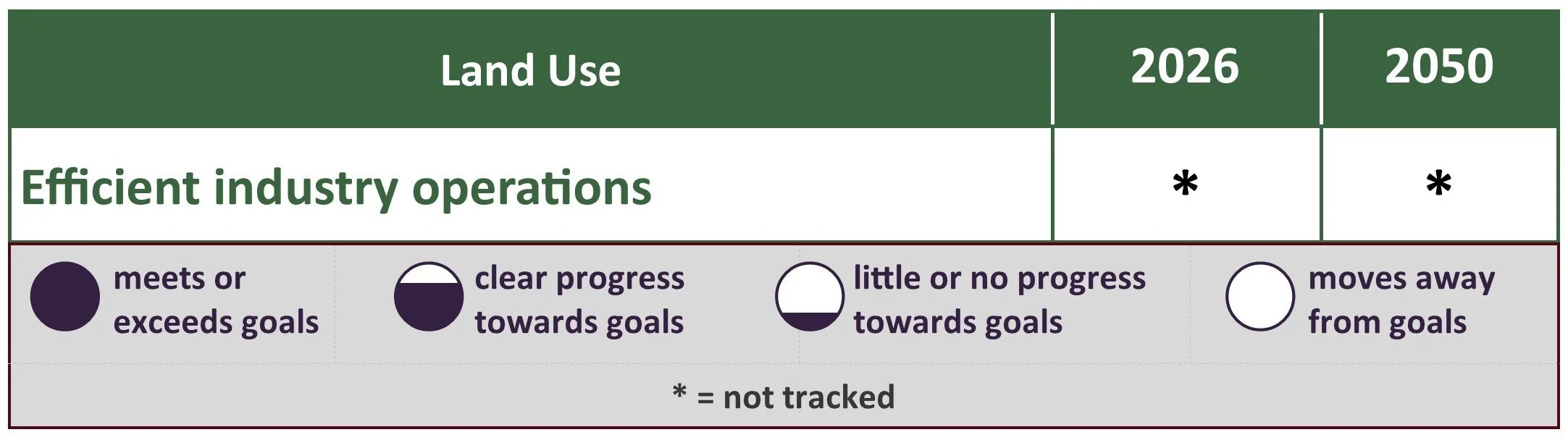
How Oregon is doing
Many existing industrial lands have been in place for decades, but their needs are evolving.
Planning for future industrial land needs
The Oregon Department of Land Conservation and Development helps Oregon cities for planning for sufficient land for 20-year commercial and industrial employment needs near urban areas. Planning and zoning a sufficient amount of commercial and industrial land helps ensure that enough land is available. For 2025, the sufficient industrial land supply measure is 83%.
Some communities help by keeping their own inventories of industrial land to support economic development. To support this goal, DLCD provides technical assistance and grant funding to local governments to plan for these industrial lands.
Consolidation centers and delivery zones
Consolidation centers receive large deliveries and split them into smaller batches that can be delivered locally. Using efficient, low-emission modes for the small local deliveries can reduce emissions.
Large companies use warehouses to consolidate loads delivered from across the U.S. and split them into smaller shipments that electric delivery vehicles can carry.
Portland’s B-Line consolidation center is an example of a micro-consolidation center. It breaks down larger loads into small ones that are delivered to their final local destination by cargo bike.
In 2023, the City of Portland was awarded a federal grant to pilot a Zero-Emission Delivery Zone. During a six-month demonstration, the pilot trialed incentives and regulations to encourage cleaner ways to deliver goods downtown.
Reducing packaging
The recent Oregon Plastic Pollution and Recycling Modernization Act is expected to lower the overall volume of packaging. The law motivates businesses to minimize or redesign their shipping materials in response to new fees levied on the total weight and type of packaging they introduce into the state. This can reduce shipping weight, volume, transport costs, and emissions.
How Oregon can improve
The state can support local agencies to remove barriers for efficient use of industrial lands. This includes more transportation hubs and consolidation centers near and within urban areas, especially ones that support electric vehicles.
The state could also support business and communities with funding and technical assistance on best practices for industrial land use. The additional funding would help local governments update long-term land development strategies, inventory their existing industrial lands and research new ones, and plan for future infrastructure.
Further refining metrics would help measure and track progress in this area.
Urban Growth Boundary ExpansionCompact Mixed Use AreasParking Reform and ManagementEfficient Industrial Lands