Oregon state agencies and local governments are working together to reduce greenhouse gas emissions from transportation to 80% below 1990 levels by 2050.
We are accepting feedback on the website and ideas to reduce transportation emissions in Oregon. Please Contact Us to submit by October 31st.
Oregon state agencies monitor progress towards Oregon’s goal to reduce emissions from transportation. Recent setbacks have knocked Oregon off track from our 2050 goals.
Our latest forecast completed in 2026, shows if current conditions continue, Oregon is expected to reduce greenhouse gas emissions by 10% below 1990 levels by 2050.
Emissions reduction progress
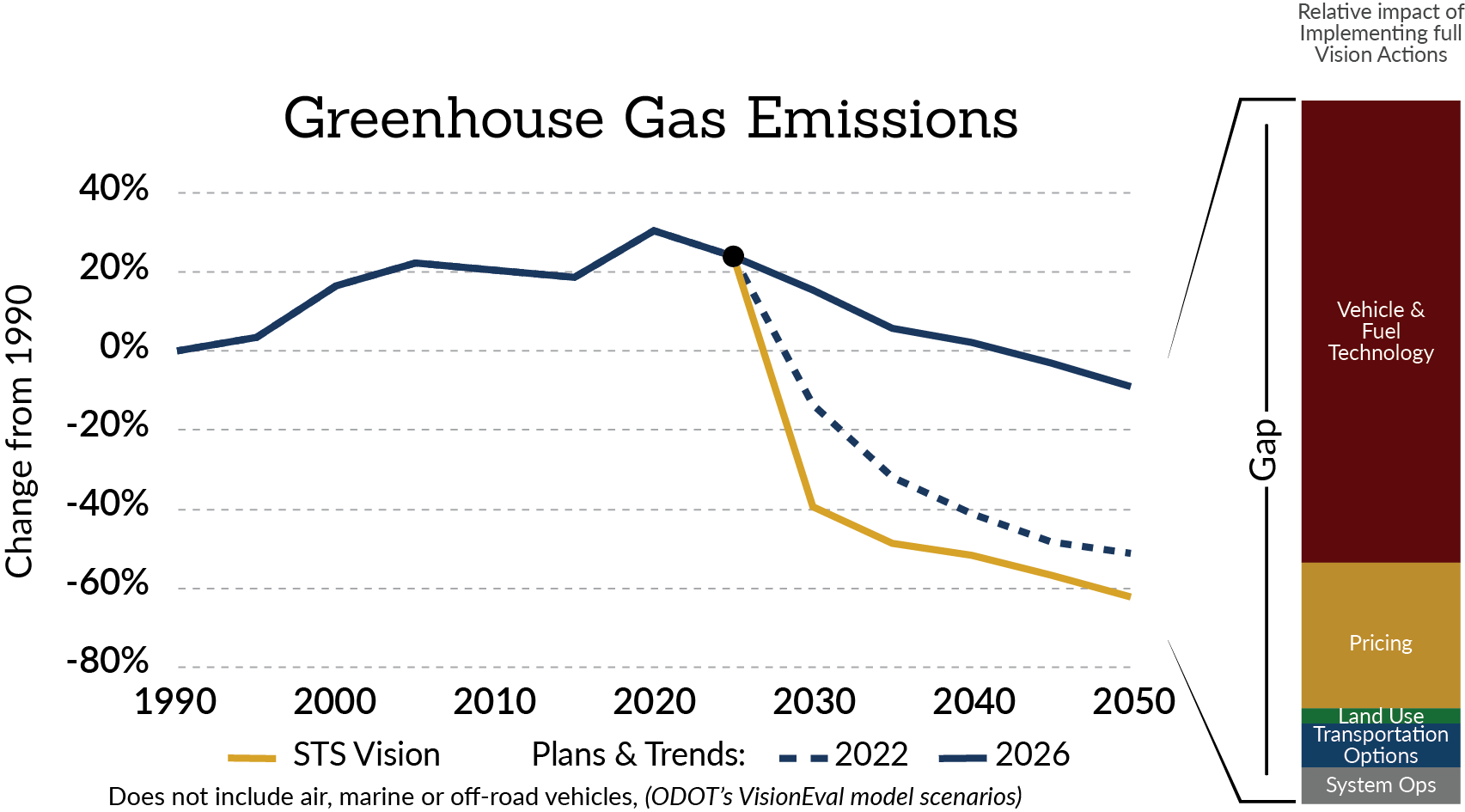
This is a significant change to our prior projected progress. Our 2022 forecast, using trends and conditions at that time, showed Oregon expected 60% emissions reduction by 2050. As conditions change, so do the anticipated results.
Oregon's progress has been stalled by a combination of federal government actions, a lack of sustainable transportation funding, and market factors. Learn about the challenges facing Oregon on the Progress page.
Visit the About the Plan page to learn about the plan underlying the goal, how the data is collected, and how reducing emissions will benefit Oregon.
To reach the 2050 goal, we’re working in six transportation categories to reduce growth in vehicle miles traveled, and to clean up each vehicle mile. Click each tile below to learn more about each category and opportunities for Oregon to improve progress in each category.
See the Progress page for more information about reaching our 2050 goal.

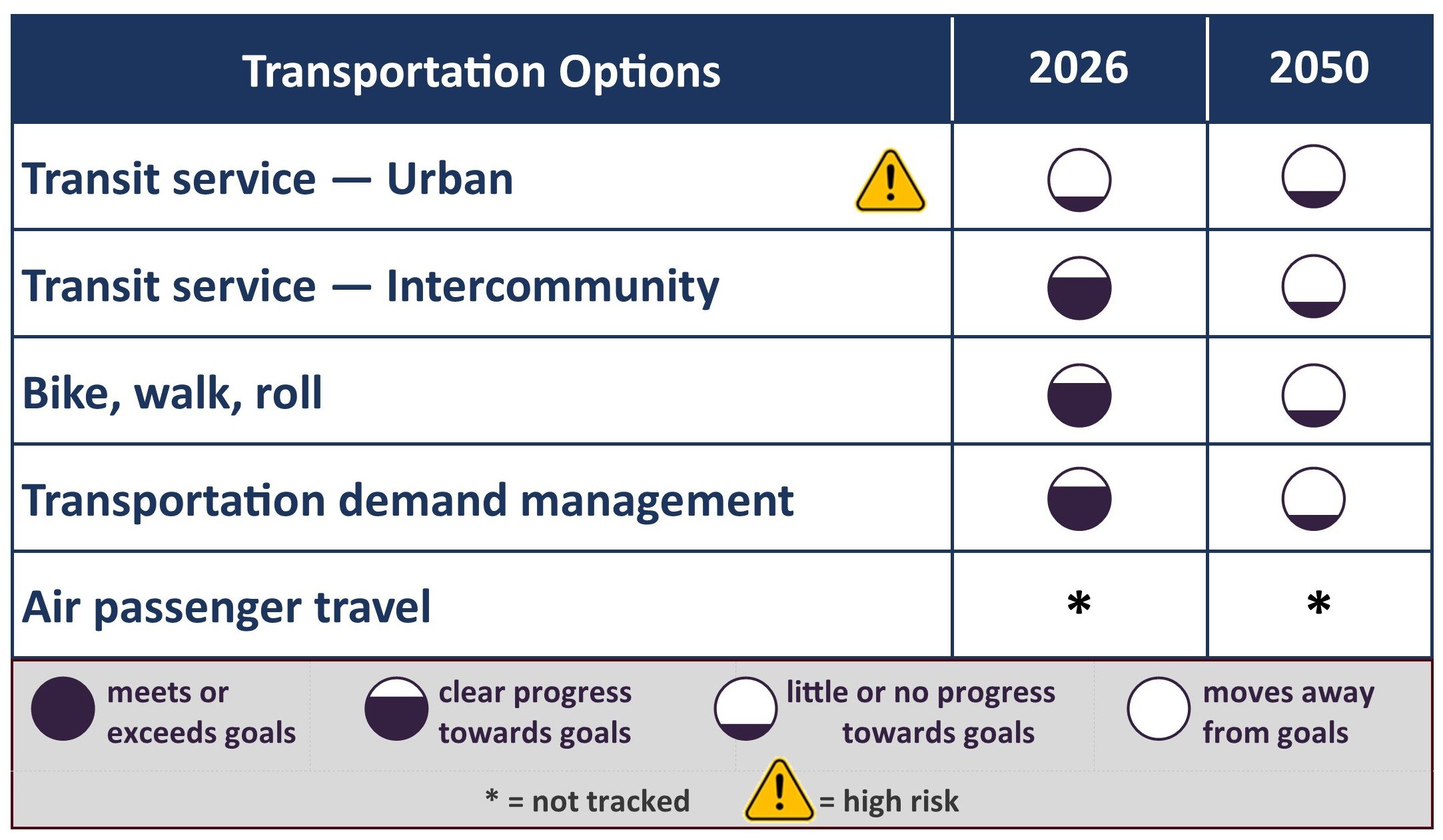
Transportation Options
Creating opportunities for Oregonians to use all modes of transportation, like biking, walking/rolling, or public transit.

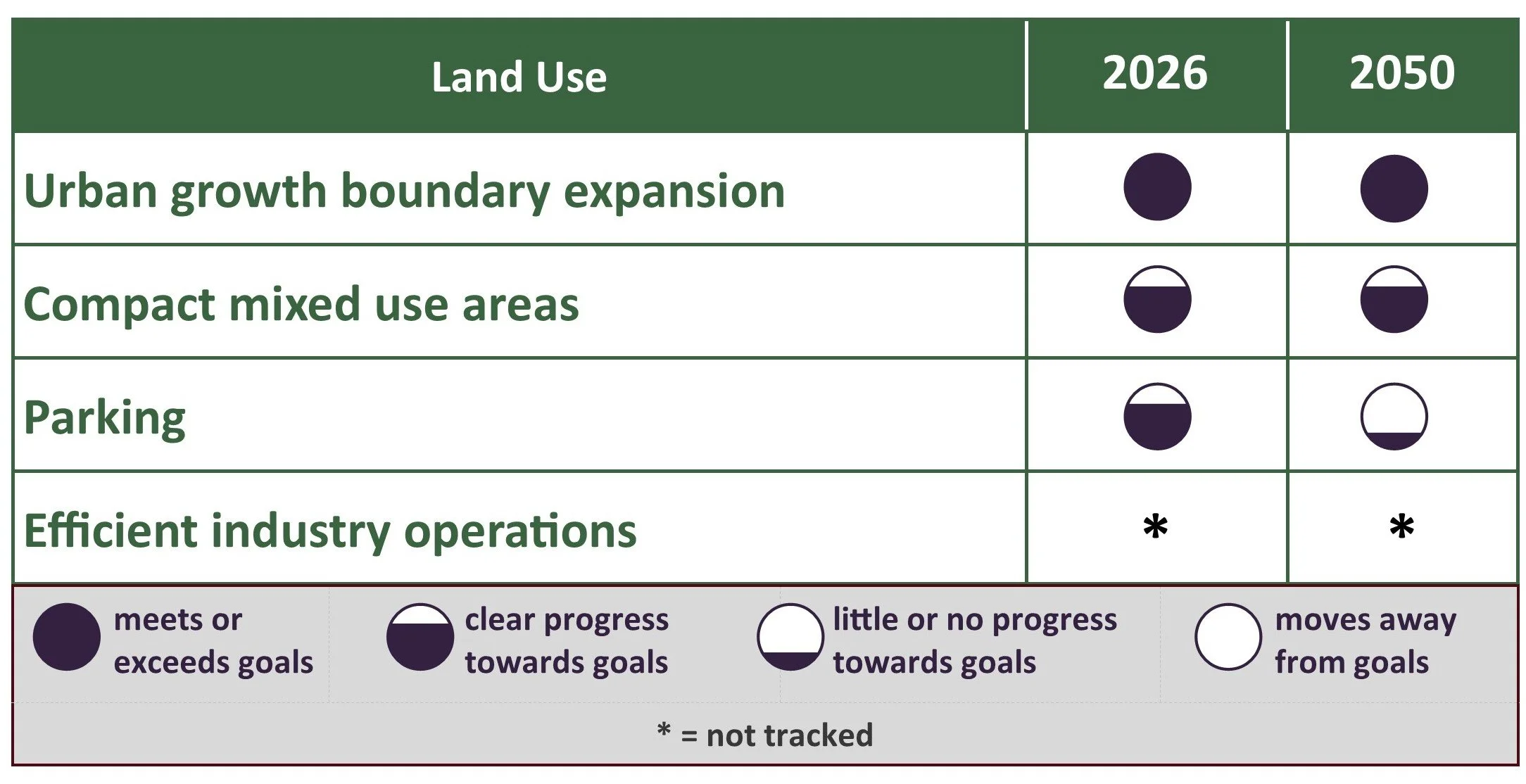
Land Use
How far people have to travel between home, work, shopping, and other daily necessities.

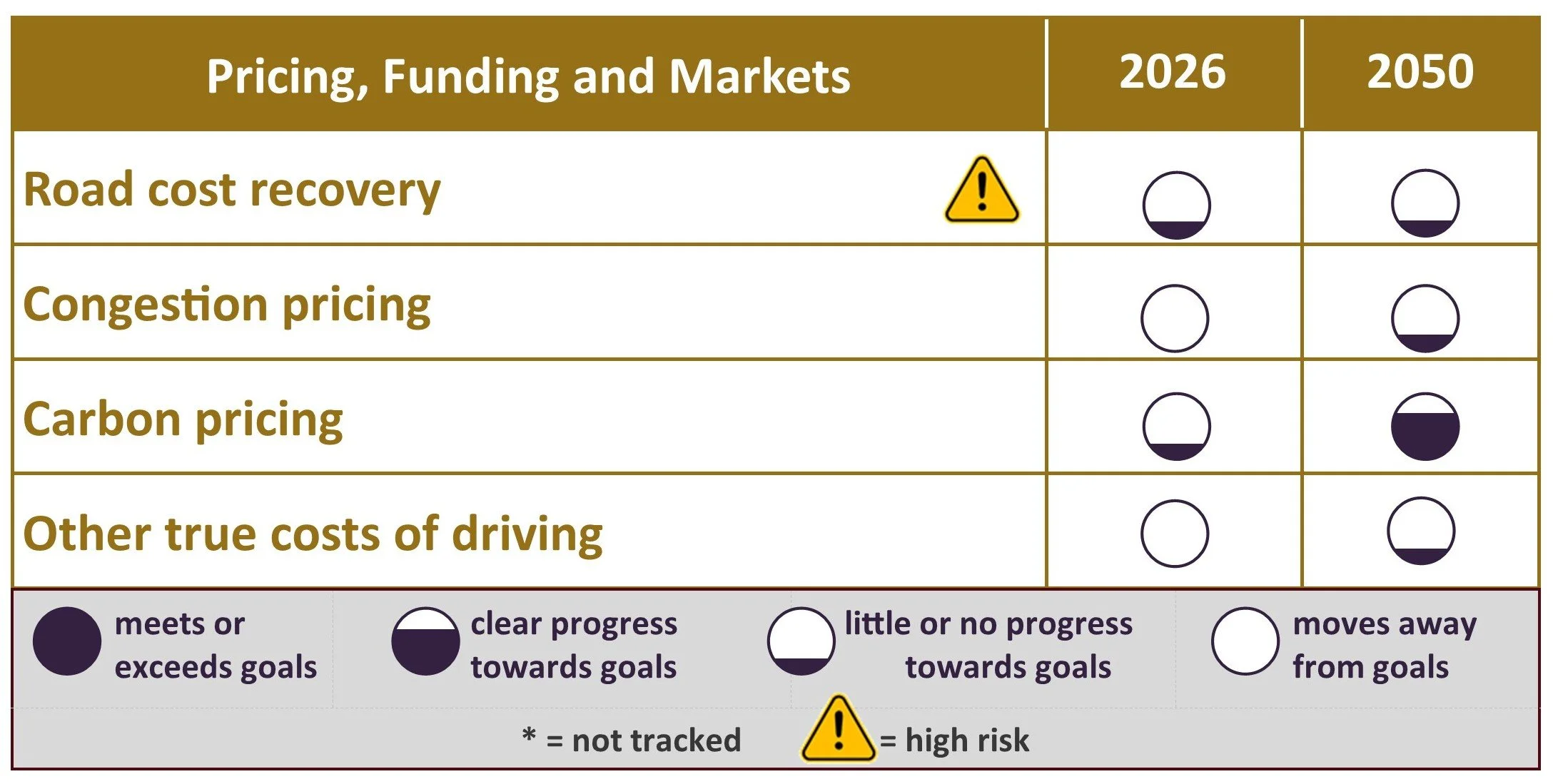
Pricing, Funding and Markets
Policies that affect the cost of travel so all transportation users pay their fair share, and help maintain our system.

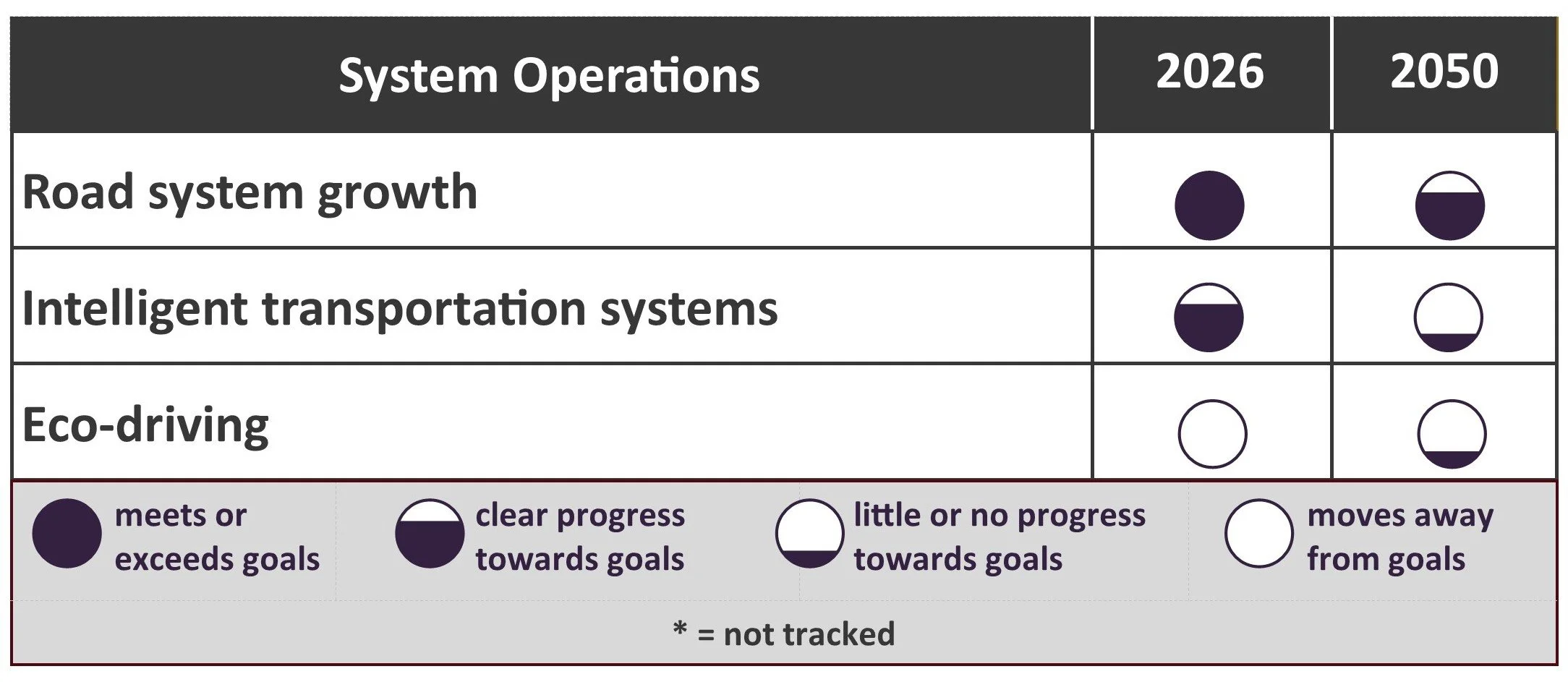
System Operations
Manage road growth, reduce traffic congestion, and move people and goods efficiently.

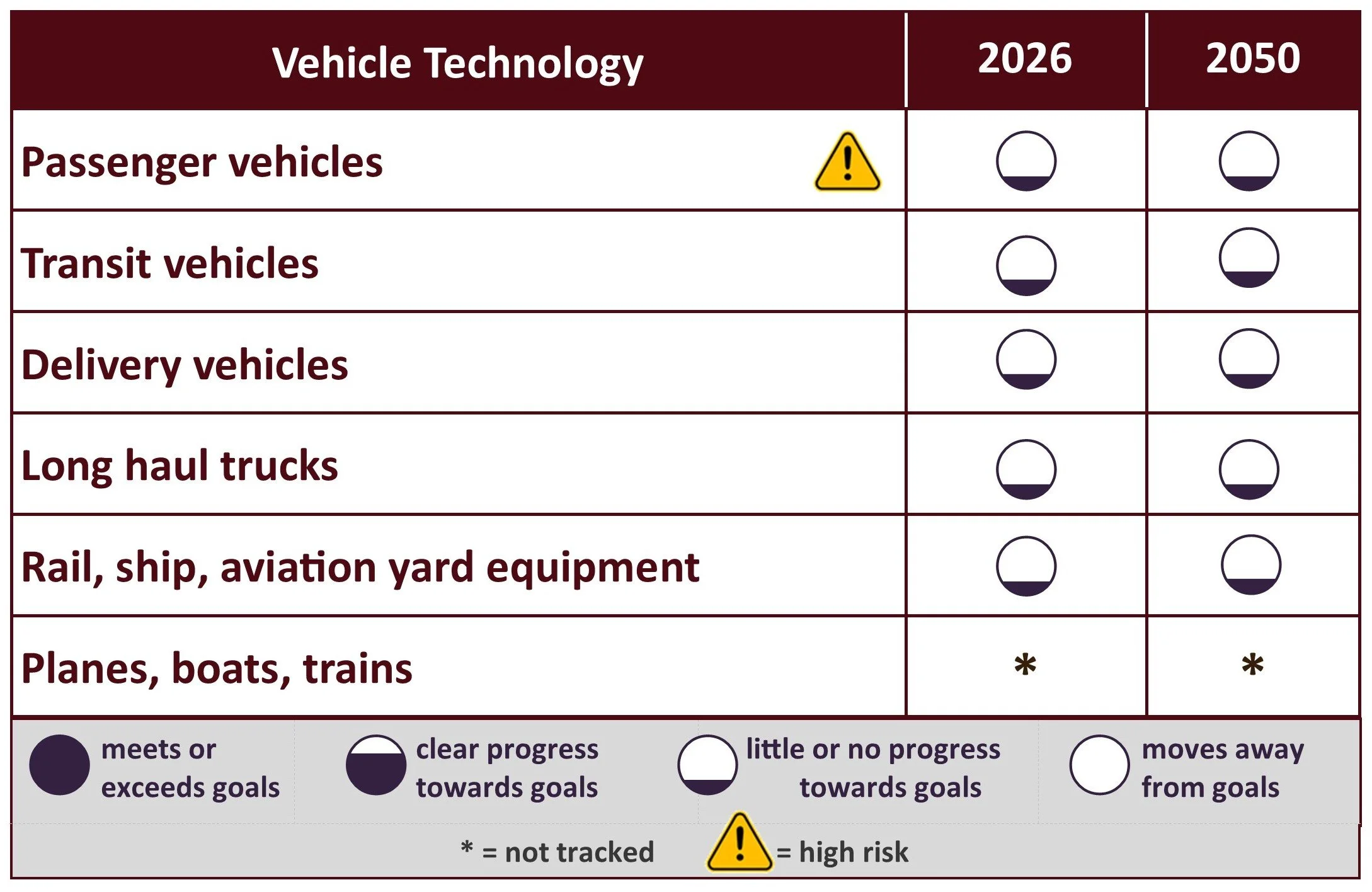
Vehicle Technology
The types of engines or motors used to power the vehicle, and ways to make vehicles more efficient.

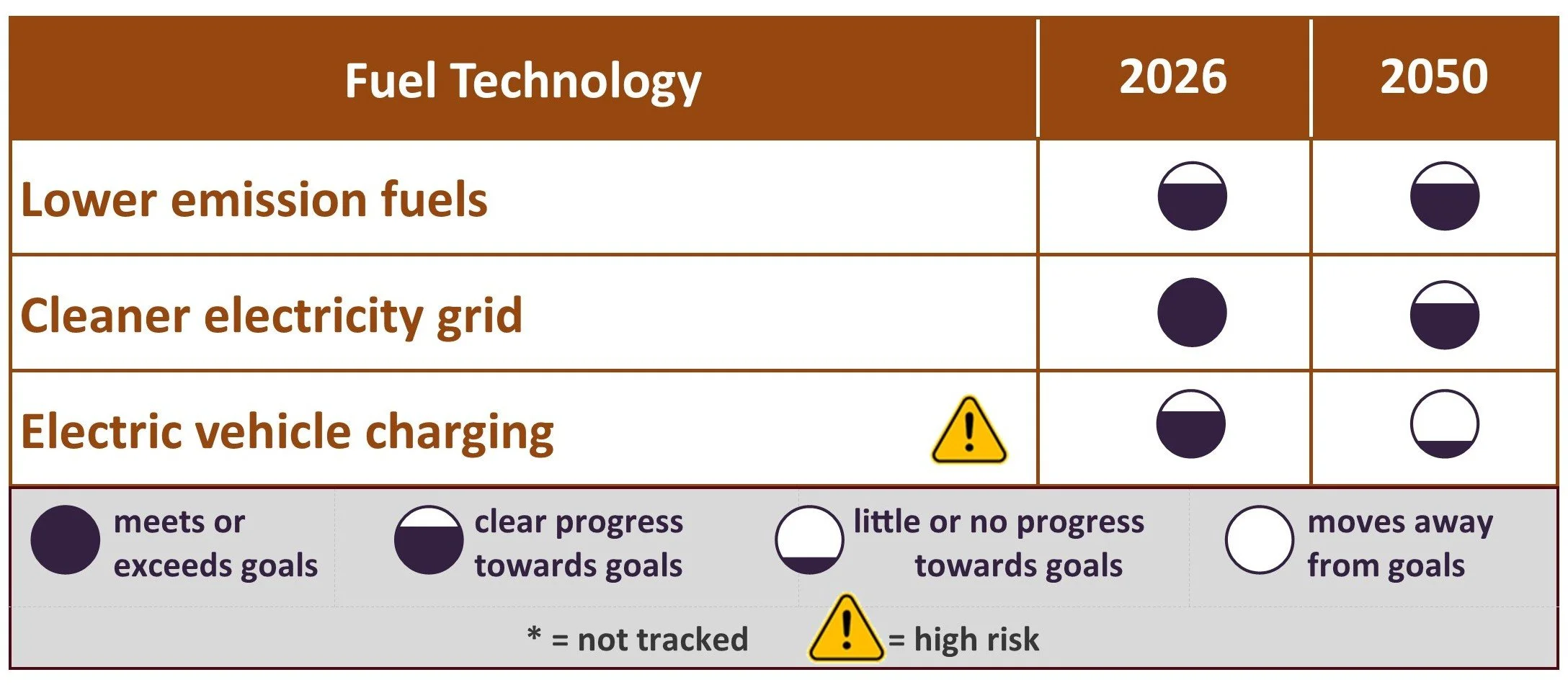
Fuel Technology
Ways to reduce the amount of carbon emitted by the fuels used for transporting people and goods.
Category progress
We’re tracking our progress in each transportation category to meet our 2050 goals. Explore each category above to learn more.

We’ve identified four areas as “high risk.” Each one represents reversed progress from our last forecast in 2022.
Passenger Vehicles: Legal uncertainty regarding Oregon’s clean vehicle regulations will slow EV adoption.
Electric Vehicle Charging: The loss of sustained funding for public EV charging stations may slow EV adoption.
Transit Funding: Transit service is expected to be reduced in communities across the state unless funding is increased.
Sustainable Funding and Pricing: Oregon lacks sustainable, long-term funding to maintain our transportation system and low-emission modes. A stronger shift to paying the full cost of road usage would provide a price signal for reducing vehicle miles traveled.