
Transportation Options
Biking, walking and rolling, carpooling, transit, and passenger rail offer low- and no-carbon transportation options, which are key to our emission reduction goals.
Transportation options create opportunities for people in Oregon to use active modes of transportation on Oregon’s system. Especially ones that emit less greenhouse gas emissions like biking, walking, rolling, scooters, carpooling, public transit, and passenger rail.
The Oregon Department of Transportation works with local jurisdictions to support transportation options through projects, funding and investments, and public education and outreach.
Many people rely on different options to get around, and not every person owns or has access to a car. State and local investments in transportation options can improve experiences with modes people rely on every day.
More options also create more opportunities for people to choose a low emission travel mode instead of driving alone. Non-driving options are especially attractive when vehicle costs fluctuate, like a spike in gas prices. As more people shift their travel habits, this will have several benefits:
Reduced greenhouse gas emissions from transportation.
Safer, quieter streets.
Improved physical and mental health of people who walk, bike or roll to get around.
Less money spent on car payments, insurance premiums, and repair bills. Some people may be able to reduce the number of cars in their household.
All transportation modes must be easy to access, safe, and equitable for all people in Oregon. Options can’t be limited to urban areas, either; people in rural areas of the state also need accessible and reliable ways to make trips without driving alone.
Visitors to our state can also make different transportation choices if they are aware of non-driving options from the airport, around town, and across the state.
A note on air travel: Oregon doesn’t have goals or metrics for air travel, but freight and passenger air travel produce over 10% of Oregon’s greenhouse gas emissions. State agencies will work with our partners across the state to advance ways to reduce emissions from air travel.
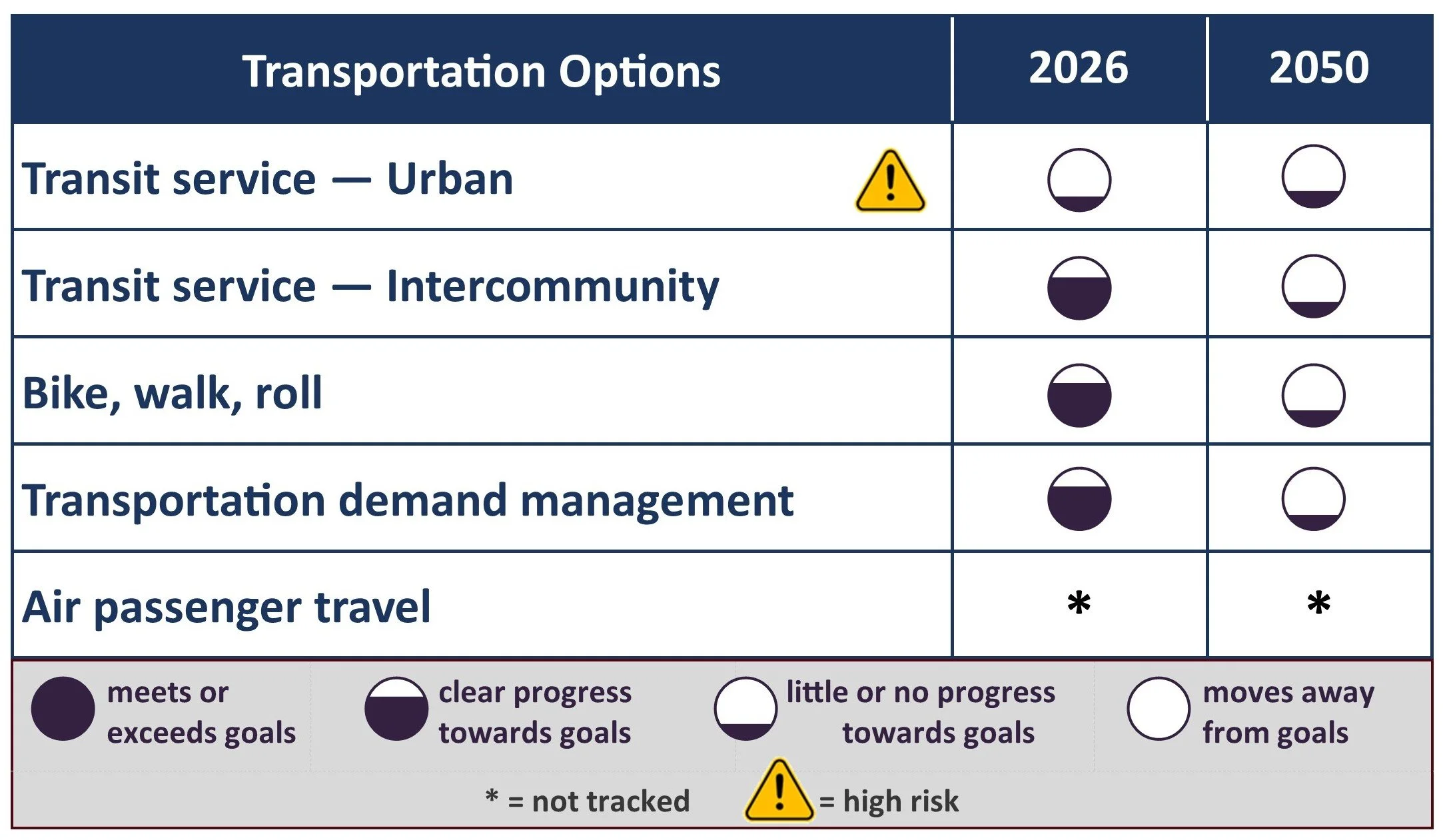
Progress snapshot
Transit service: Urban and Intercommunity
This action is identified as a high risk area that represents reversed progress from previous cycles. Transit service is expected to be reduced in communities across the state unless funding is increased.
Urban transit ridership has shifted to about 70% of pre-COVID-19 pandemic levels, and the current funding outlook is uncertain. Intercommunity transit saw record ridership in 2023-2024, and its funding future is better in the short term. Long-term however, we expect transit service to barely keep pace with Oregon’s growing population and rising inflation.
Bike, Walk, and Roll
People in Oregon are choosing to bike, walk or roll at a consistent rate and Oregon ranks among the top states for active transportation options. Maintaining recent state and federal funding for bike, walk and roll networks is critical to continue this trend. New land use requirements should allow more walkable trip lengths in urban areas of the state.
Transportation Demand Management
State and local efforts to manage demand are working well near-term by building on existing programs, and more people working remotely. To continue this trend we need incentives that encourage more non-driving trips, these incentives can be bolstered by partnering with employers and businesses.
Explore each category below for a breakdown of our progress.